The Collection / Language & Literature
Language & LiteratureWilfred Owen & the Individual Oral
A first Individual Oral, cut in half. Five minutes, one literary work, and three global issues already built — so students can concentrate on the one thing the assessment is actually testing.
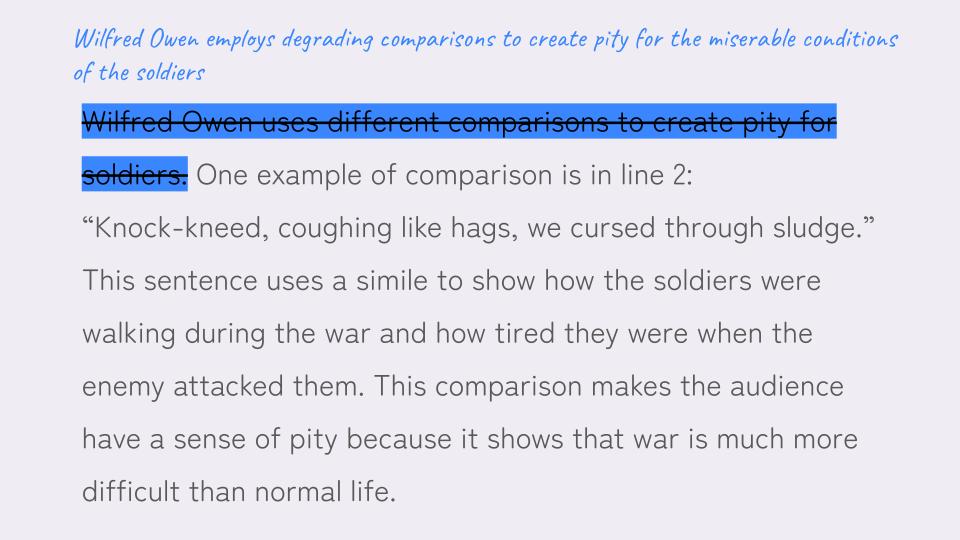
Five slides of thirty-one
The problem
The Individual Oral asks a student to do six new things simultaneously. Define a global issue. Find it in a literary work and a non-literary body of work. Choose a defensible extract from each. Talk about extracts and whole works in balance. Give equal attention to form and content. Sustain it for ten minutes without notes beyond a five-bullet outline.
Asked to do all of that at once, most students fall back on what they already know how to do, which is analyze a poem. The global issue gets stated in the opening thirty seconds and then quietly abandoned. Criterion B is where the examiner sees it first, because a student who is really arguing about the poem cannot sustain an argument about the issue.
What I changed
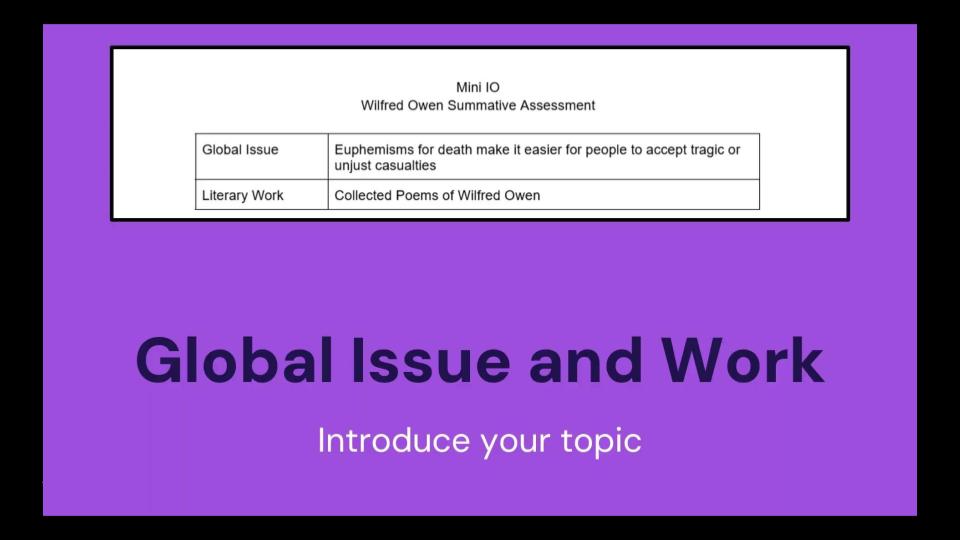
I stopped treating the first IO as a small version of the real thing and started treating it as half of one. This unit runs a Mini IO: five minutes, the literary work only, followed by two teacher questions — one on the extract, one on the rest of the collection. The non-literary half arrives later, once the shape of the task is familiar.
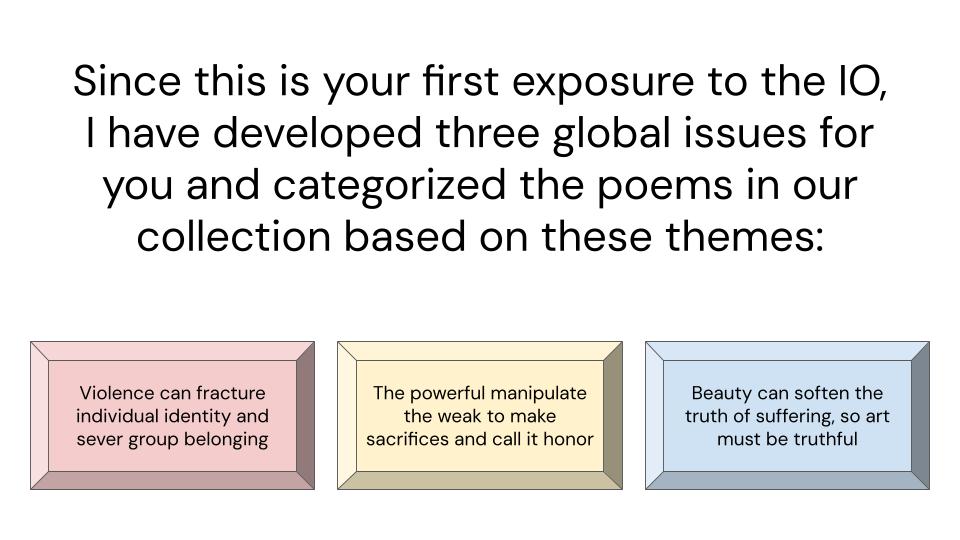
The second change was to stop asking students to invent a global issue on first contact. Three are supplied, each drawn from a different area of exploration, with the poems in the collection already sorted underneath them:
- Culture, identity and community — violence can fracture individual identity and sever group belonging
- Politics, power and justice — the powerful manipulate the weak to make sacrifices and call it honor
- Art, creativity and the imagination — beauty can soften the truth of suffering, so art must be truthful
Several poems appear under more than one issue, which is the point. Students discover that the same text supports different arguments depending on the question asked of it, and they discover it by choosing rather than by being told.
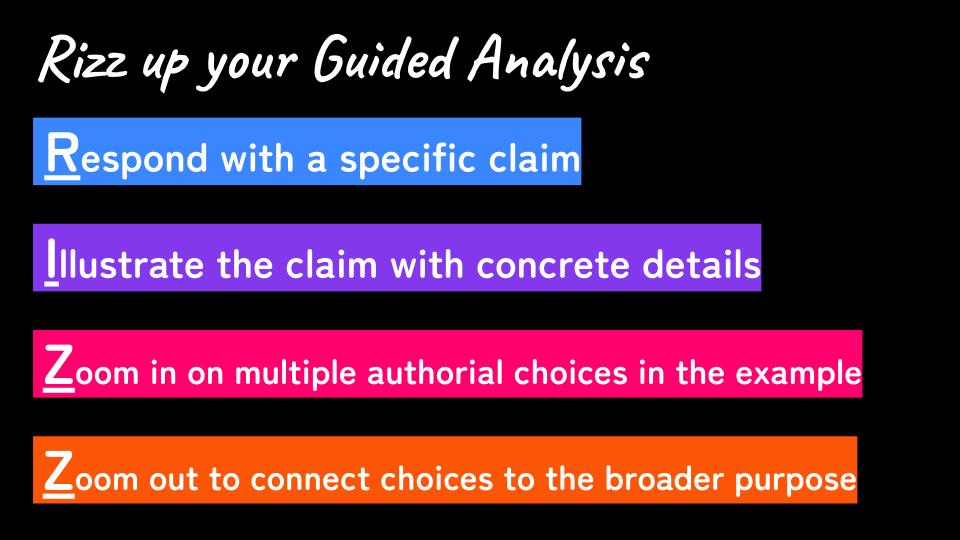
Running underneath the whole unit is a paragraph frame the students call RIZZ — Respond, Illustrate, Zoom In, Zoom Out. Zoom In is where they examine the interplay of several authorial choices at once; Zoom Out is where they connect those choices to purpose. Naming the moves is what lets a student notice that their paragraph has stopped after Illustrate.
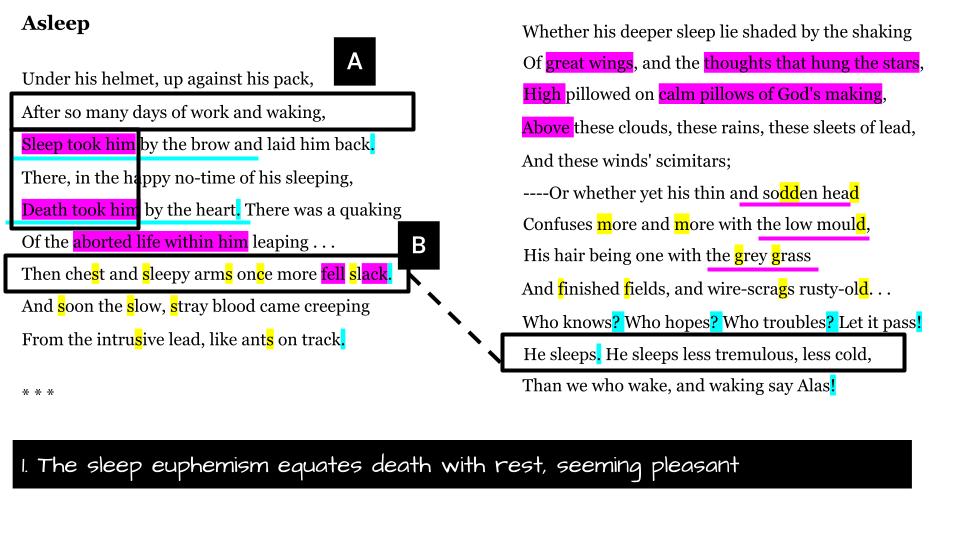
The modeling deck builds a complete outline in front of them — annotate the extract, draw two arguments from it, find support in three other poems, draw two arguments from the work as a whole. They watch the thinking, not just the result.
What's in it
Seven Google Workspace documents, delivered as force-copy links so each one lands in your own Drive, editable, with your school's formatting intact.
- Analytical Writing Diagnostic — a single-paragraph prompt on Owen's "the poetry is in the pity", used before any teaching to see where the cohort actually is
- Analytical Writing Practice — a weak paragraph rebuilt in visible stages, from generic claim to full analysis, with the reason for each revision named on the slide; ends with four open questions and a bank of quotations for students to try it themselves
- IO Proposal — explains the assessment, sets out the three global issues, and sorts every poem in the collection into its issue sets; students submit a global issue, an extract poem, and three connecting poems
- IO Process Modeling — a full worked example on "Asleep", moving from exhaustive annotation through sound, meaning and structure to a finished five-bullet outline drawing on "Strange Meeting", "Dulce et Decorum Est", "Exposure" and "Futility"
- IO Outline — the submission template, with a completed teacher exemplar beside the blank
- IO Rubric — criteria A to D in six bands, worded for students rather than examiners
- Poetry Packet — the poems the unit works from, in one document
Who it's for
Written for DP Year 1 Language & Literature, SL and HL, as a cohort's first encounter with the Individual Oral. It assumes a range of English proficiency: the RIZZ frame and the staged revision slides exist because language learners need the moves named, not just modeled.
It would also work as remedial scaffolding in Year 2 for students whose first full IO came apart, and the three global issue sets can be lifted and applied to a different poetry collection with a couple of hours' work.
Acquire
$14 One teacher · seven documents · copies to your own DriveFiles are delivered as Google Docs, Slides and Sheets. Clicking a link makes a copy in your own Drive, which you can then edit freely — a Google account is required. Department licenses available for whole-team use; reply to the checkout email and I'll sort it.
Take it from the shelf