The Collection / Language & Literature
Language & LiteratureReading the Campaign Trail
The same four photographs, the same argument, written six times — three structures, each at two levels — so a student can see exactly what changes when the writing gets better, and what doesn't.
Five pages of sixteen
The problem
Give a class one model essay and you teach them to imitate its shape. They will produce that shape on every text you set for the next two years, including the ones it doesn't fit. Give them a rubric instead and you have described the destination without showing the road.
And the belief underneath it all is the stubborn one: students think the strong essay is strong because the writer noticed more. So they hunt for extra techniques to name, and the paragraph gets longer without getting better.
What I changed
Everything is held constant except the thing being taught. One text — Damon Winter's Pulitzer-winning photographs of the 2008 Obama campaign. One argument, that the essay persuades us Obama is likeable. Then three structures, each written twice.
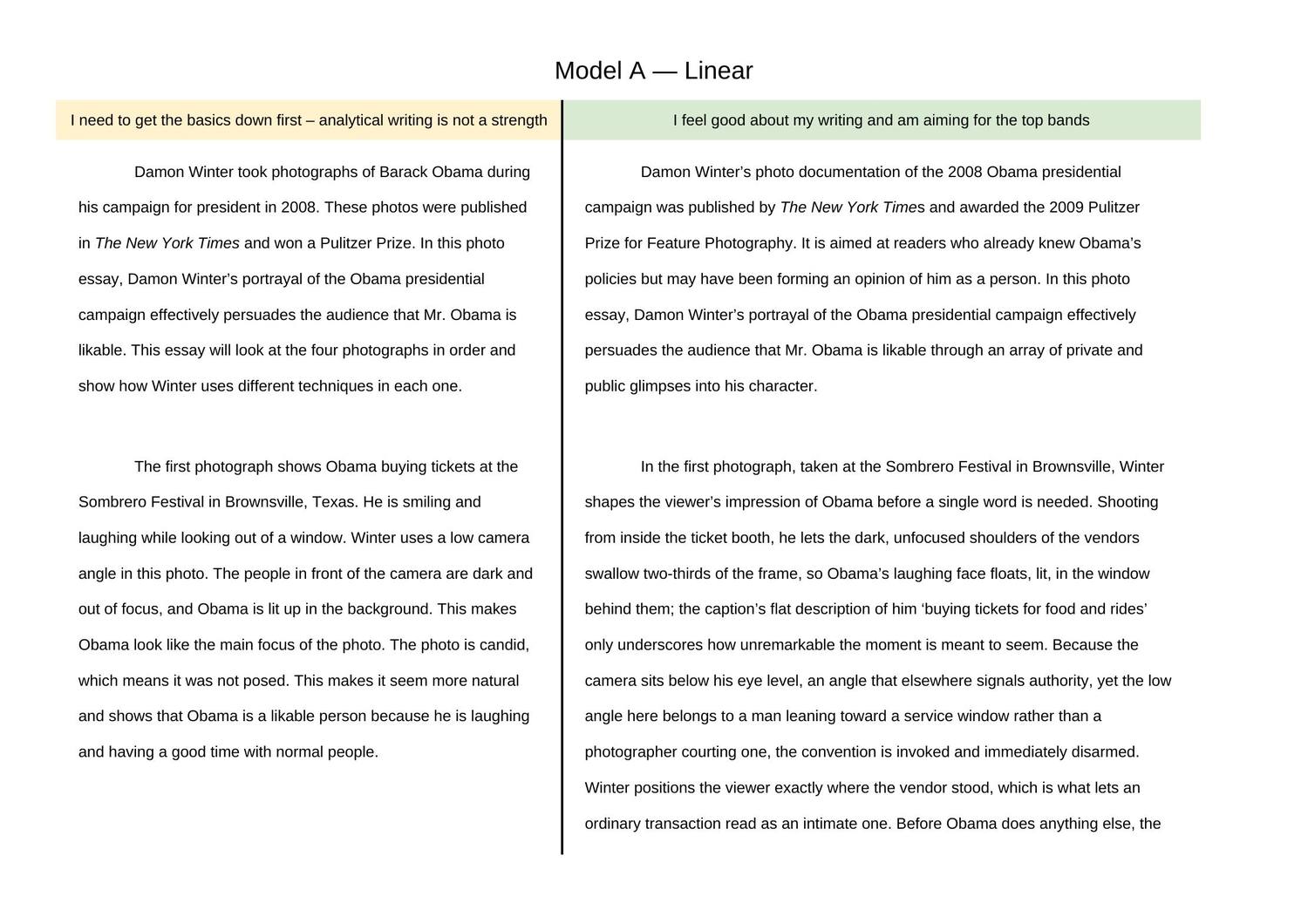
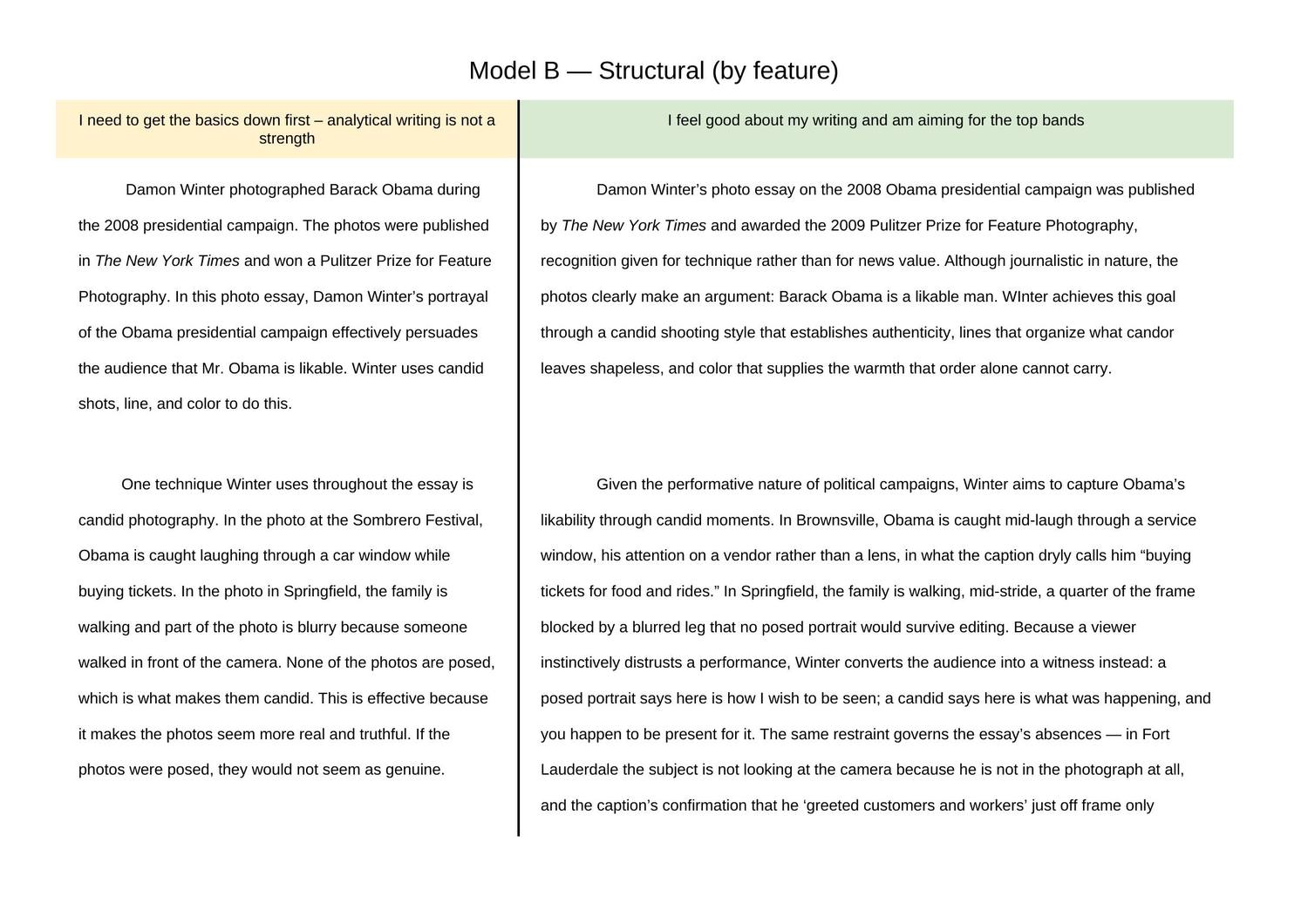
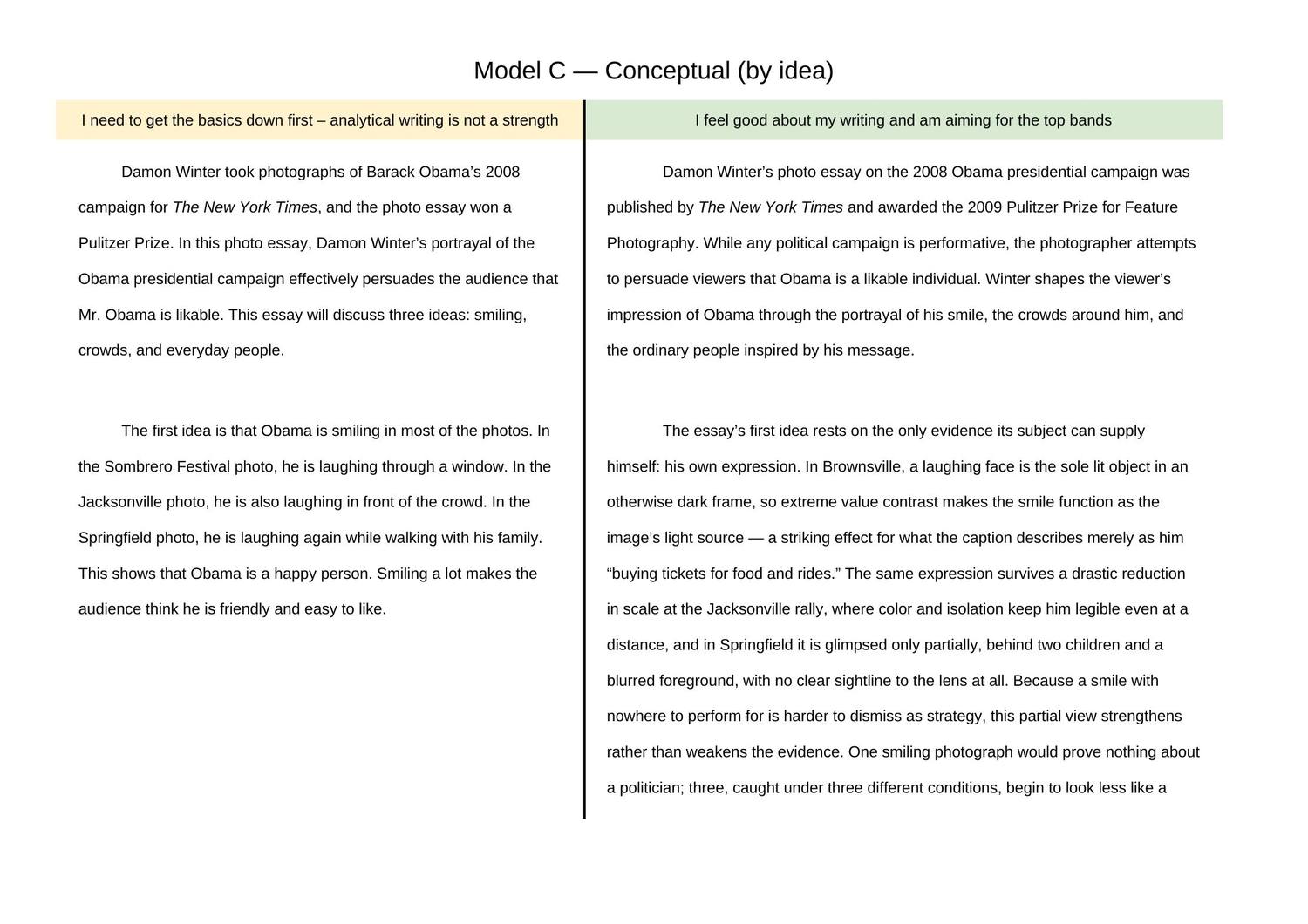
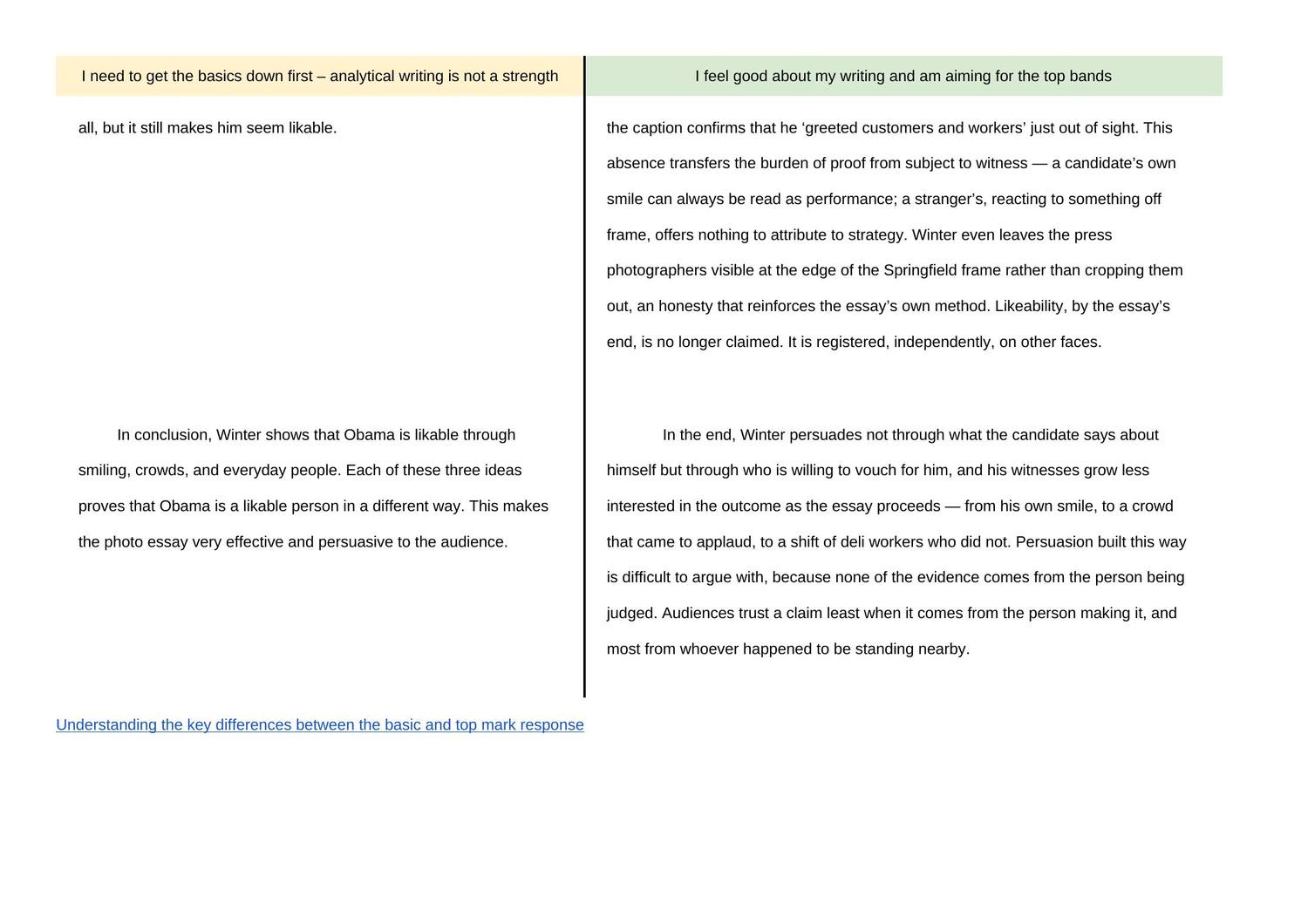
The two versions sit in parallel columns, matched paragraph to paragraph, so a student can read across rather than down. Both intros make the same claim. Both second paragraphs handle the Jacksonville rally. What differs is visible at sentence level, in the same place, on the same evidence — which makes it very hard to conclude that the strong writer simply knew more.
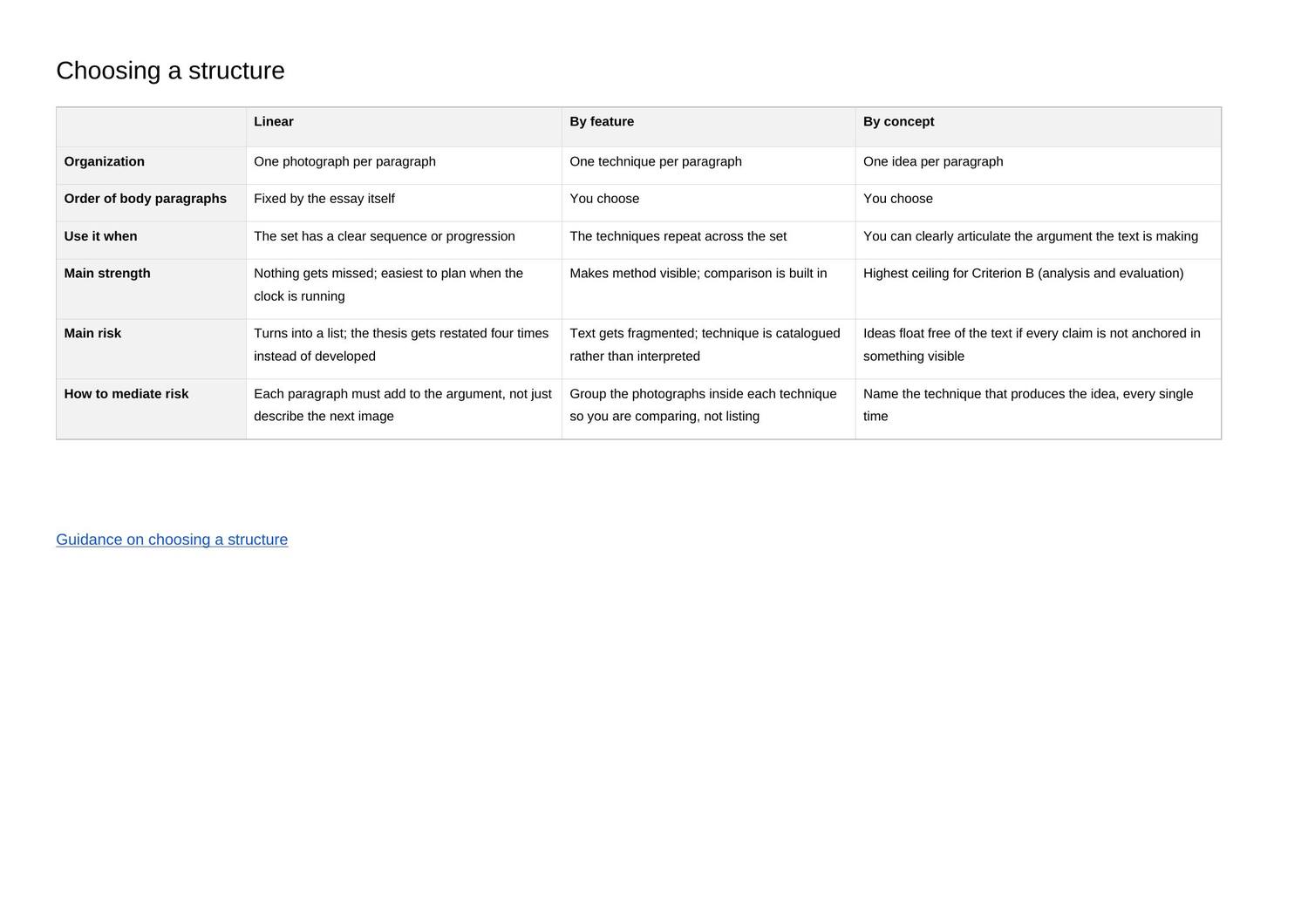
The three structures are laid out in a comparison table first, and the table is honest about cost. Linear risks becoming a list; by feature fragments the text; by concept has the highest ceiling for Criterion B and floats free if every claim isn't anchored. Each risk comes with a way to mediate it, and the rule for the conceptual model is the one worth memorizing: name the technique that produces the idea, every single time.
The columns are labeled in the student's voice
Not "basic" and "advanced". The headers read I need to get the basics down first — analytical writing is not a strength and I feel good about my writing and am aiming for the top bands.
Students choose their own column. Nobody is placed in a lower group by a teacher, nobody reads a label that tells them what they are, and in practice a fair number of students who start in the left column look across at the right one and start borrowing from it. The differentiation happens without anyone being sorted.
An image of a candidate smiling can always be read as performance; an image of strangers reacting to one cannot.
That line is from the top-band Model A, and it shows what the strong column is actually doing. It isn't naming more techniques. It's doing something with the one it named — turning an observation about a photograph in which Obama does not appear into a claim about why absence is better evidence than presence. The left column notes that Obama isn't in the third photograph. The right column works out why that was the right decision.
What's in it
- The structure comparison table — organization, ordering, when to use it, main strength, main risk, and how to mediate the risk, for all three approaches
- Model A — Linear — one photograph per paragraph, in sequence, at both levels
- Model B — Structural — one technique per paragraph: candor, line, color, at both levels
- Model C — Conceptual — one idea per paragraph: the smile, the crowd, the ordinary witnesses, at both levels
- Two short video walkthroughs — one on choosing a structure, one on the differences between the basic and top-band responses
Six complete essays in all, introduction to conclusion, on the same four photographs.
Who it's for
DP Language & Literature, SL and HL, at any point in the two years. It's most useful early, when a cohort is deciding what a Paper 1 essay even looks like, and again in the term before the exam, when students are choosing which structure they will actually run under pressure.
The photo essay is a good teaching text in its own right — visual, contemporary, and genuinely arguable — but the six models transfer to any Paper 1 text with the structures intact.
It's the worked companion to Paper 1 in Seven Stations: station 04 on that sheet asks a student to choose a structure and commit. This is what each of those choices looks like when it's finished.
Acquire
$5 One teacher · 16 pages · editableSupplied as an editable document, so you can cut a model, change the labels, or swap in your own text and keep the structure. Department licenses available for whole-team use — reply to the checkout email and I'll sort it.
Take it from the shelf