The Collection / Theory of Knowledge
Theory of KnowledgeWhat Makes Science, Science?
Four lessons that watch scientific method change completely four times over, then ask what survived — and end with students holding a real research paper they cannot read.
Five slides of ninety-five
The problem
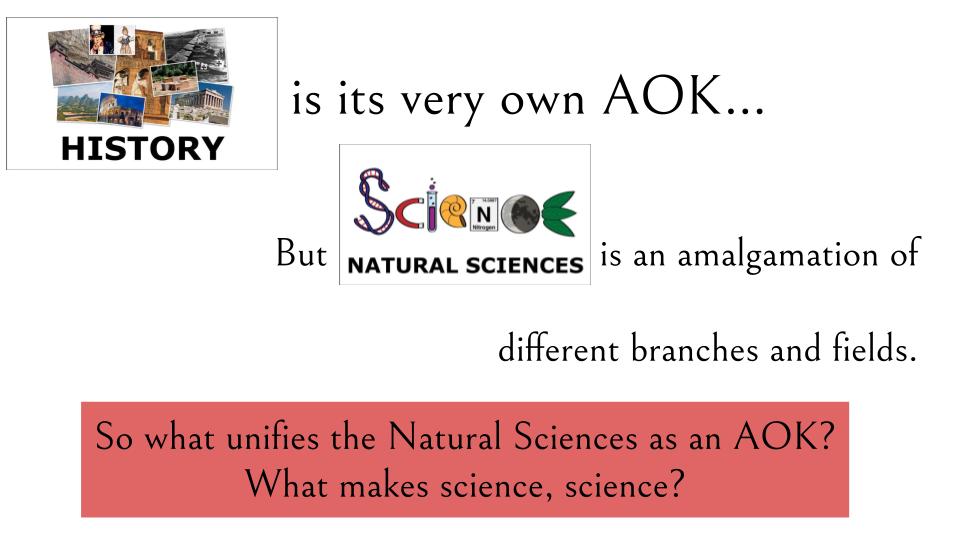
Students arrive believing in the scientific method — the numbered list from a Grade 8 poster, observation to hypothesis to experiment to conclusion. It is not exactly wrong. It is a snapshot of one moment in a long argument, taught as though it were the definition of the thing.
The unit also has to hold a harder line than most TOK lessons manage. Show students that method is historically contingent and you risk producing relativists who conclude that science is just another story. The natural sciences unit has to make the contingency vivid and leave students more confident in science than they started, which is a difficult double act.
What I changed
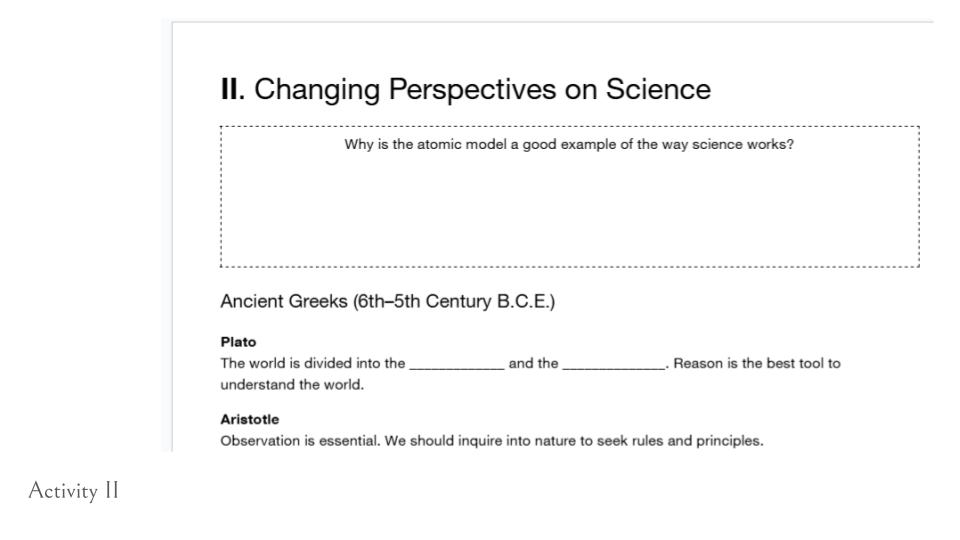
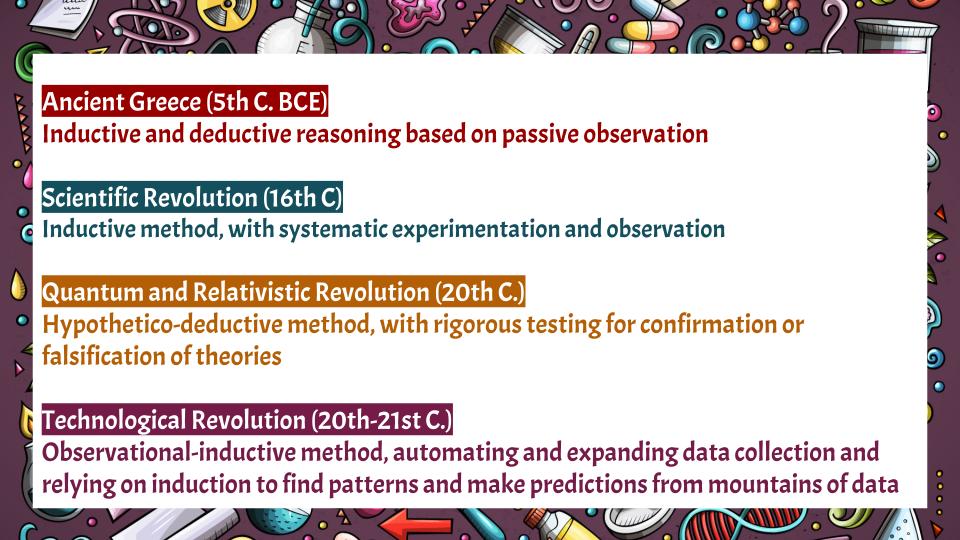
One question, traced whole. What are things made of? The atomic model runs through every era of the second lesson — Greek reasoning, the Scientific Revolution, the challenge to induction, the twentieth century, the age of data — so students watch the same question answered by five incompatible methods and see the answers get better anyway.
Each era arrives with its people and its claim in its own words: Plato and Aristotle; Galileo's book of nature written in mathematics; Bacon systematizing observation; Hume pointing out that induction is circular; Whewell, Carnap, Hempel's logic of confirmation; Popper insisting the best theories are the hardest to prove wrong; and then the technological turn back to induction, finding patterns in data nobody had a hypothesis about.
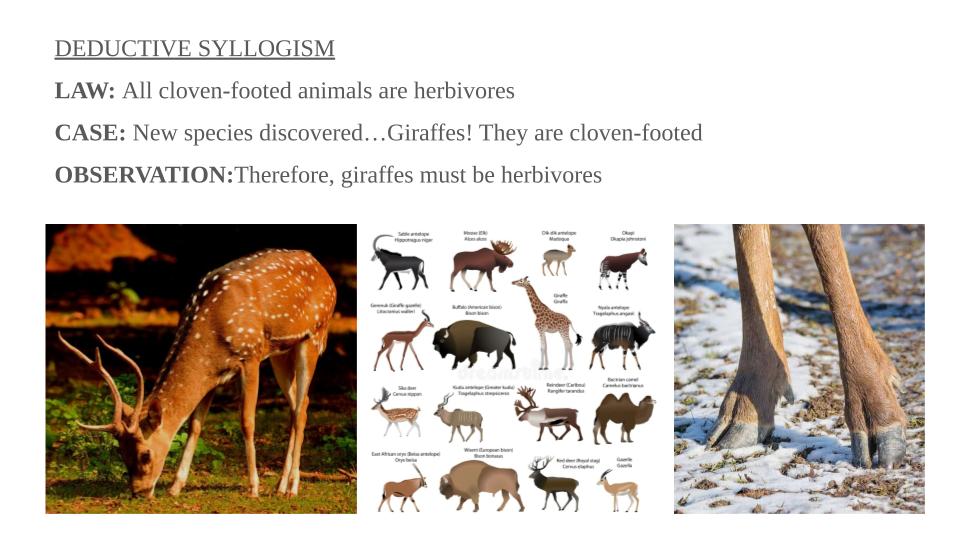
Induction and deduction get taught concretely rather than defined. Antelope are cloven-footed and herbivores; camels are cloven-footed and herbivores; therefore all cloven-footed animals are herbivores. Then a giraffe is discovered, and the law runs the other way. Same animals, both directions, one slide each.
Despite all of the evolution of scientific thinking we have explored, what methods, tools, and perspectives remain constant?
Then the whole arc runs again
Having built the five-era framework on the atom, the unit immediately tests it on something else entirely: disease. Miasma theory from 460 BCE through the plague doctors — bad air, and perfectly logical given what could be observed. Then Hooke and van Leeuwenhoek's animalcules and zymotic theory, induction built on new instruments. Then germ theory, hypothetico-deductive, with Redi's experiment on spontaneous generation doing the falsifying. Then mapping and modeling disease in the 2000s, patterns out of complex data.
Students are not told the framework transfers. They fill it in themselves on a second case and discover that it does, which is a different kind of knowing. And miasma theory is the right first case precisely because it was reasonable — it explains why the sick cluster near the marsh, and it took better instruments rather than better logic to displace it.
Trust, and then the wall
The third lesson is Oreskes on why we should trust scientists, with questions that do not let students coast: explain the fallacy of affirming the consequent; why did early astronomers find nothing when they tested Copernicus, and what does that reveal about auxiliary hypotheses; what is the difference between blind authority and scientific authority, given that trusting science is an appeal to authority either way. That last one is the honest question most classrooms avoid.
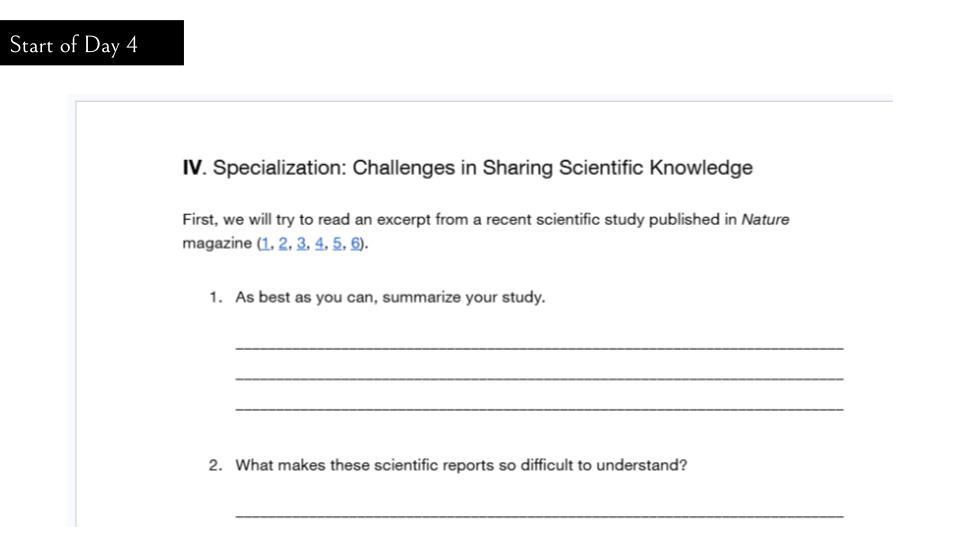
Then the fourth lesson hands students an actual paper from Nature and asks them to summarize it. They can't, and that is the design. The instruction that makes it work:
Choose the most difficult, technical, and complex sentence from your report, one that you are confident nobody in this room understands. Copy it below.
Incomprehension becomes evidence rather than failure. Students then compare the paper with their own IB science textbook, and the gap between the two is the lesson: somewhere between the journal and the classroom, knowledge was translated, and every translation is a set of choices made by somebody. John Oliver's segment on scientific studies closes it, which is the rare case of a comedy clip earning its place in a TOK lesson.
What's in it
- The deck — 95 slides across four days, with the day breaks marked
- The activity packet — four sections matching the four lessons
- A feature article on science as a stance rather than a subject, with comprehension questions and a choice of four critical-thinking prompts — the Brontosaurus as self-correction, the lone-genius myth, and failure as infrastructure
- A fill-in framework for the five eras, then the same framework applied blank to the history of disease
- Seven structured questions on the Oreskes talk
- The specialization activity — six different Nature papers so groups aren't reading the same thing, with the comparison to a school textbook and two closing reflection prompts
Who it's for
DP Year 1 Theory of Knowledge, as the Natural Sciences area of knowledge. Four lessons, and the packet is designed to be worked in class rather than set as homework — much of it depends on students filling frameworks in as the deck moves.
No science background required to teach it. The atomic model and germ theory are both carried by the slides, and the syllogism examples use animals rather than equations.
It pairs with Four Experts, One Algorithm, where Popper's falsification and the replication crisis arrive as practical problems in the human sciences, and with Discovered, or Merely Agreed Upon?, which runs the same historical-contingency argument about mathematics.
Take it
Free Deck and packet · copies to your own DriveBoth copy into your own Drive, editable. The Nature papers are linked in the packet rather than embedded, so swap in whatever is current — the activity works with any six papers that are genuinely too hard.