The Collection / Language & Literature
Language & LiteratureTwo Works, One Clock
A hundred and five minutes, two novels, and one essay that has to actually compare them. Seven stations with a time budget on each, and a body structure built so that comparison can't be postponed.
Five views of the kit
The problem
Most Paper 2 essays are not comparisons. They are two essays stapled together — half about the first work, half about the second, and a final paragraph announcing that both novels deal with power in interesting ways. The student has written fluently for an hour and a half and answered a question nobody asked.
It happens because that structure is the path of least resistance under time pressure. Writing everything you know about one book is easy; holding two books in view simultaneously is hard, and a student with no plan will always take the easier road.
What I changed
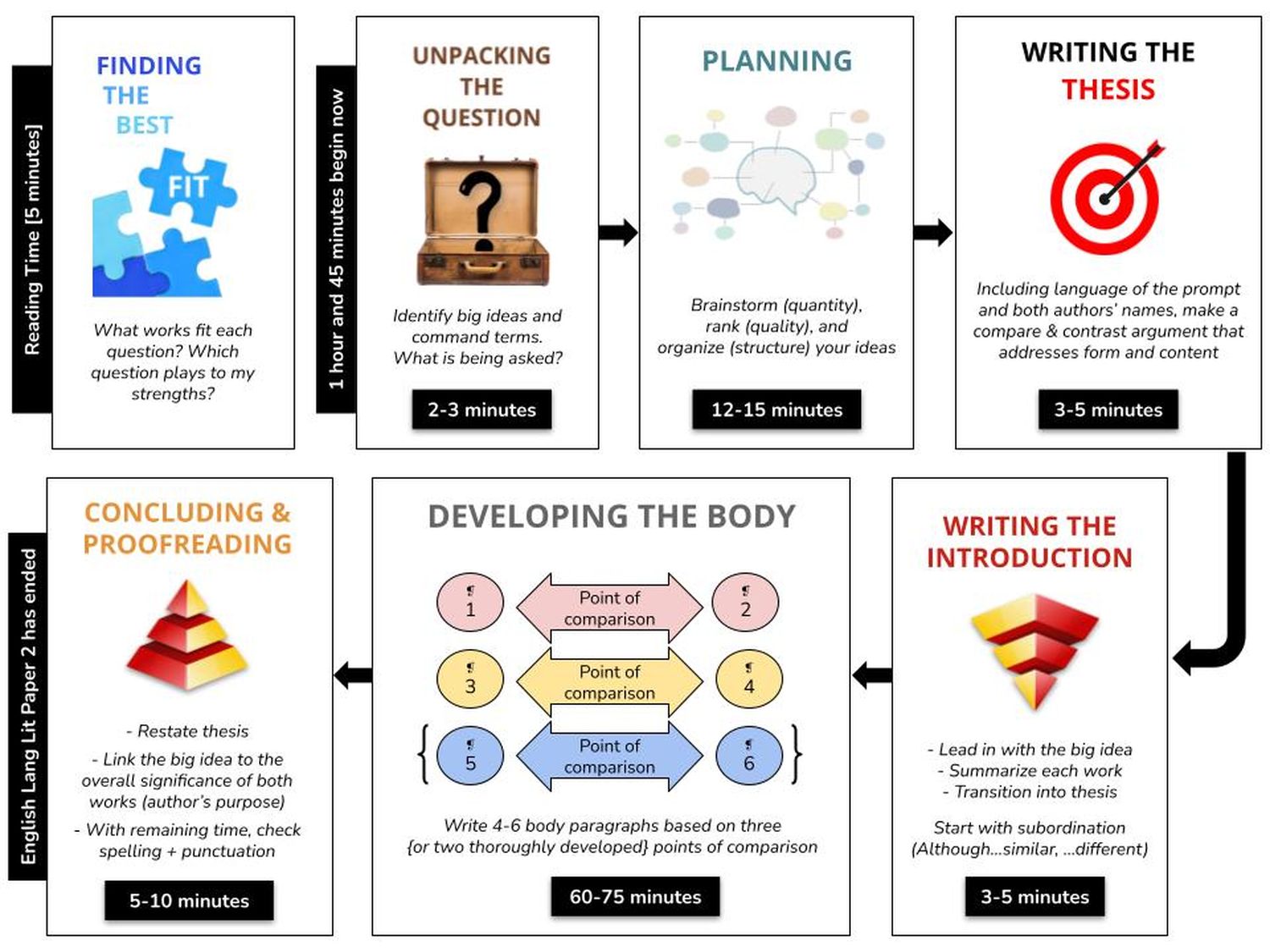
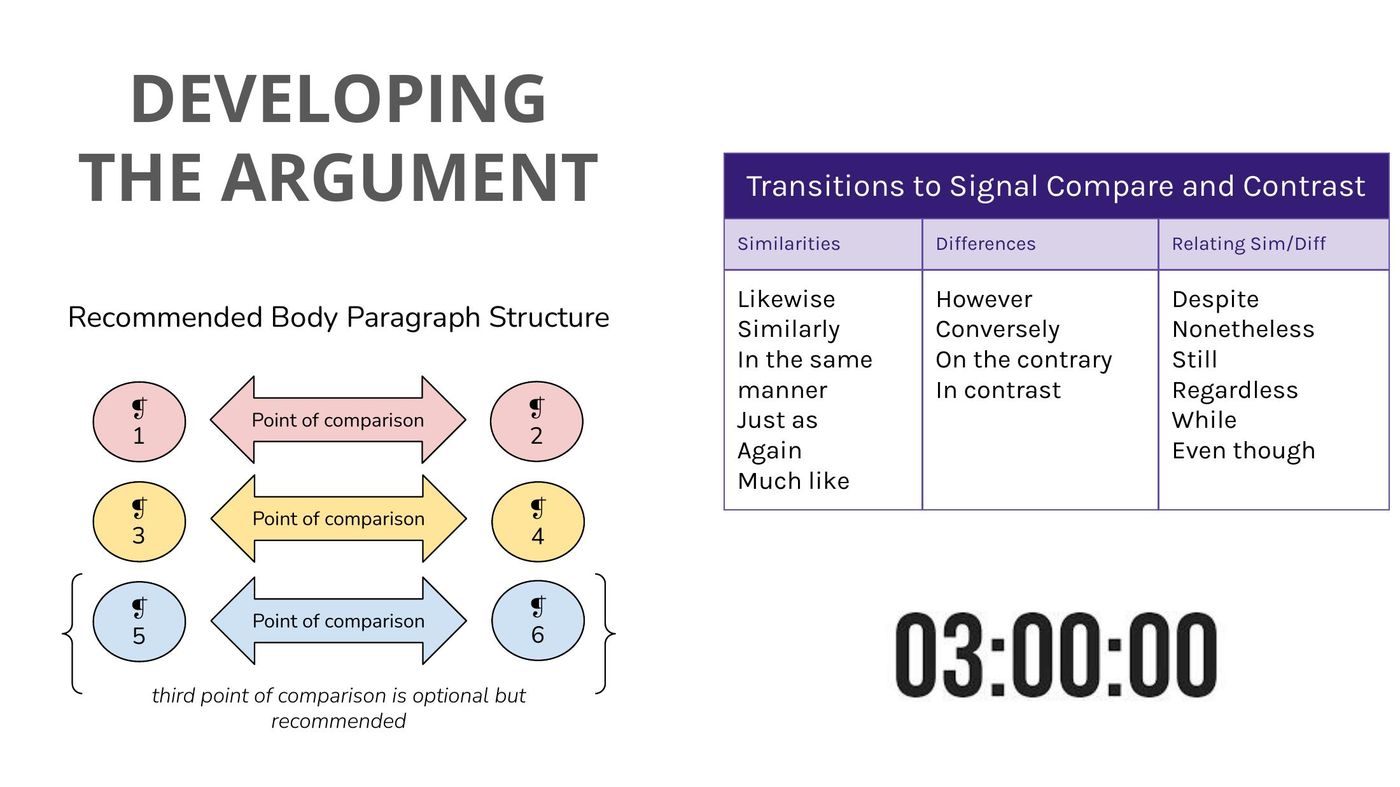
The fix is structural, and it sits in the body diagram. Paragraphs pair off by point of comparison, not by work. Paragraphs one and two take the first point across both texts, three and four take the second, five and six the third. There is no arrangement of this shape in which a student can write about one novel for forty minutes, because the second paragraph is already waiting for the second text.
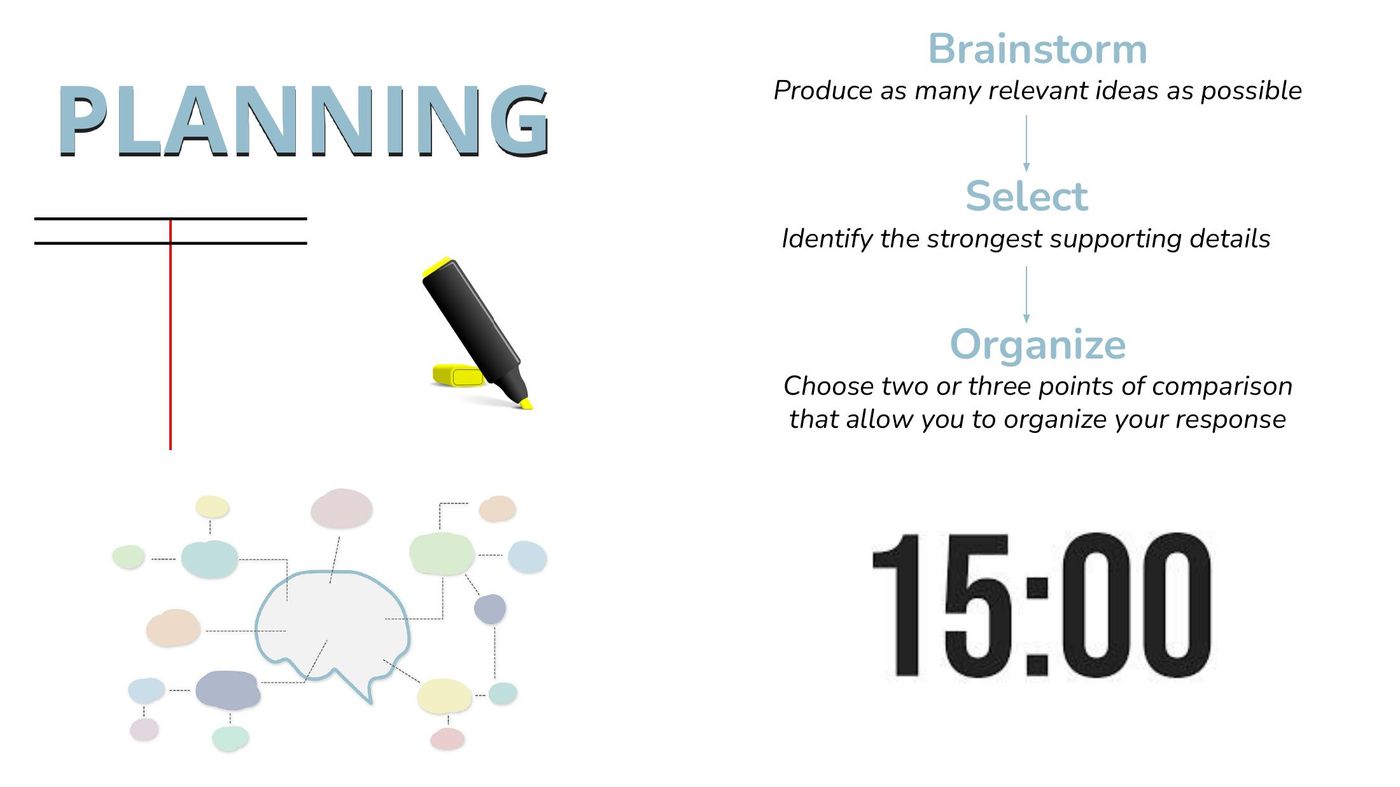
The second change is how much time planning gets. Twelve to fifteen minutes, before a word of the essay is written, which feels alarming to students watching the clock. But the plan is what prevents the stapled-essay outcome, and the sheet legitimizes it by putting a number on it. Planning is also broken into three named moves — brainstorm for quantity, select for quality, organize into two or three points of comparison — so the fifteen minutes has something to do rather than being fifteen minutes of staring.
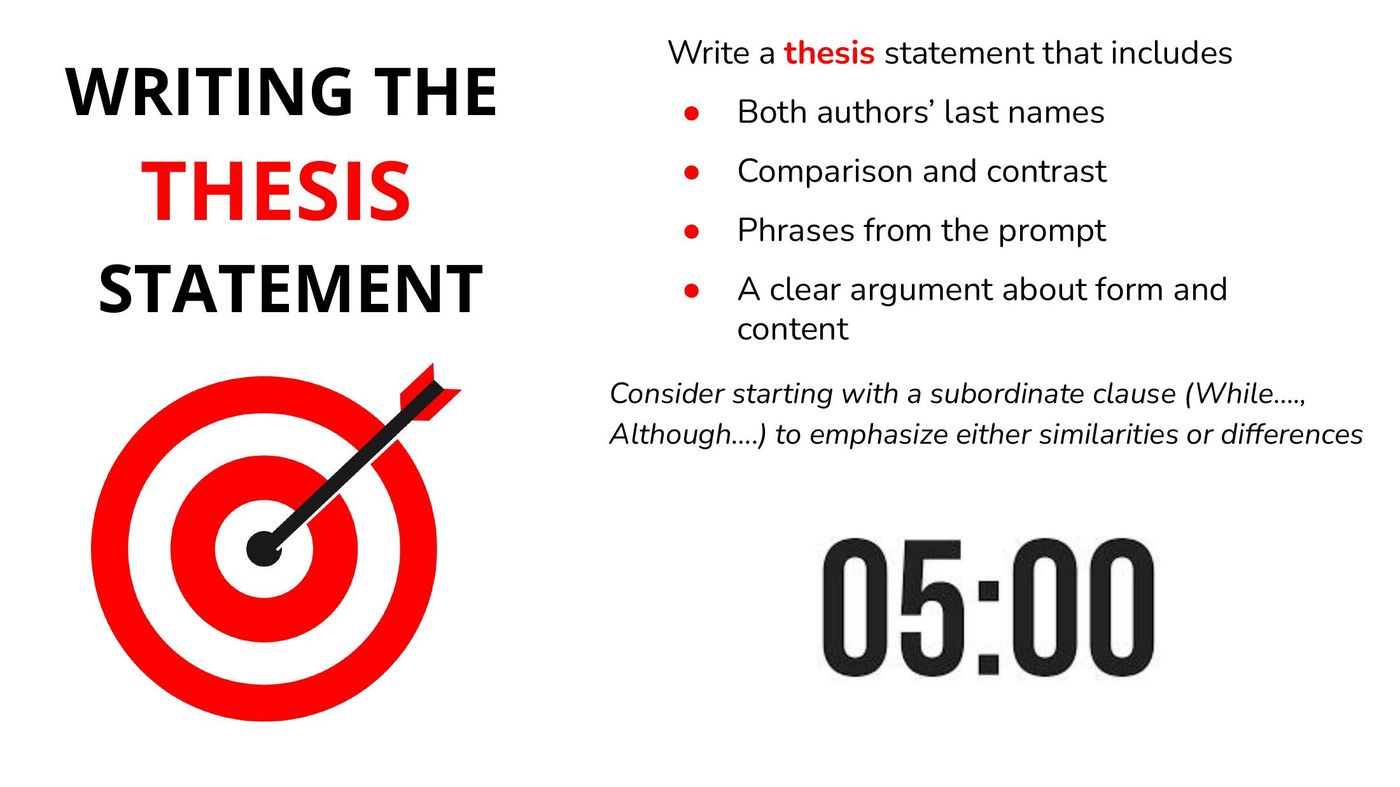
The thesis gets a recipe rather than a description: both authors' surnames, comparison and contrast, phrases lifted from the prompt, and a claim about form as well as content. Starting with a subordinate clause — While, Although — does the comparative work in the first four words, which is a small trick that reliably raises a Criterion C mark.
The transition banks are grouped three ways: similarities, differences, and relating the two. That third column is the one students never have language for, and it's where comparison actually happens.
The deck runs the clock
Every station in the deck carries a live countdown timer, embedded in the slide. Put it into presentation mode and the room is on the clock — twelve minutes visibly draining during planning, seventy running down through the body. Students stop asking how long they have left, and start feeling it, which is the point.
This is why it's delivered as Google Slides rather than a PowerPoint. The timers are embedded video, and exporting to .pptx strips them out and breaks the layout on the way. The Google version arrives intact, timers running, formatting as built. The countdown videos are used with the permission of @countdowntown, who make them.
The video
There's a walkthrough on YouTube in which I take a real past Paper 2 and work it by hand in real time — shortlisting two questions, brainstorming both works side by side, and building the plan into a full outline. It's free and public, so watch it before deciding whether the rest is worth your money. The typed version of that outline, and the key-moment decks it draws on, are free in Wild Cards.
What's in it
- The visual organizer — one printable sheet, seven stations, each carrying its time budget: five minutes of reading time to find the best fit, two or three unpacking the question, twelve to fifteen planning, three to five on the thesis, three to five on the introduction, sixty to seventy-five on the body, and five to ten to conclude and proofread
- The pacing deck — eight Google Slides walking a class through the same sequence, with a live countdown timer on every station, plus the thesis components, the body diagram, and the transition banks set out in full
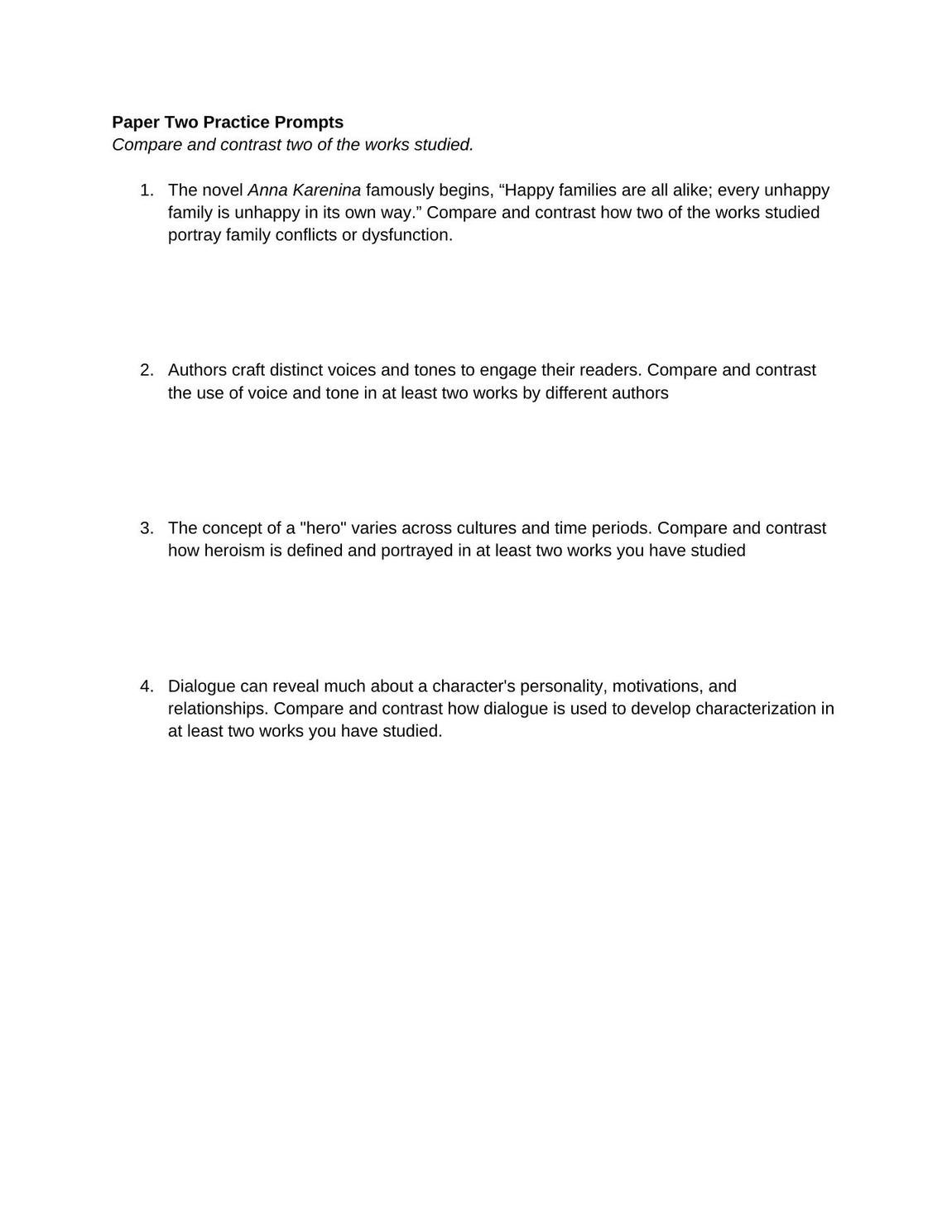
- Four practice prompts — family conflict, voice and tone, heroism, and dialogue as characterization, each open enough to run against most pairings on most reading lists
- The video walkthrough — a past paper worked from reading time through to a finished thesis
Who it's for
DP Language & Literature, SL and HL. Best introduced once a cohort has finished two works and can actually attempt a comparison, then returned to before each timed practice. The organizer is designed for A3 on the wall, so the sequence is familiar long before it is needed under pressure.
The prompts are deliberately generic — they name no texts, so they work against whatever you happen to teach, and they'll survive changes to your reading list.
It's the Paper 2 twin of Paper 1 in Seven Stations. A department running both gives students one visual language across both papers, which matters more than it sounds: under exam pressure, familiarity with the shape of the task is most of the battle.
Acquire
$5 One teacher · deck, organizer and prompts · copies to your own DriveThe deck is delivered as Google Slides — clicking the link makes a copy in your own Drive, timers intact, ready to edit. A Google account is required for that part; the organizer and prompts are ordinary files. Department licenses available for whole-team use — reply to the checkout email and I'll sort it.
Take it from the shelf