The Collection / Language & Literature
Language & LiteratureWild Cards
You can't know which Paper 2 question you'll be dealt. You can know, in close detail, the moments you'll play on it — eighteen of them across six works, and a real past paper worked through to show one being played.
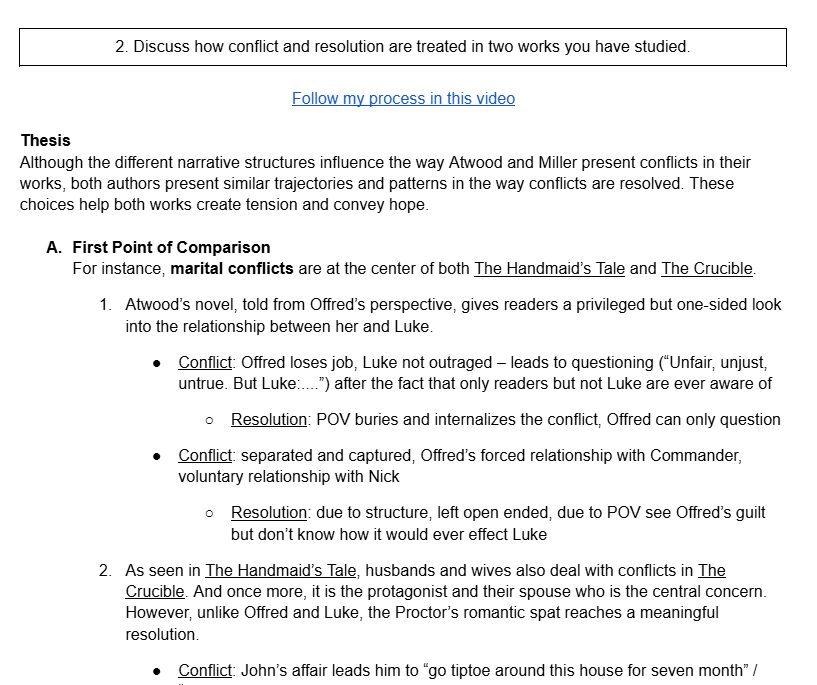
Five views across the decks, the video and the outline
The problem
Paper 2 is the one exam students cannot rehearse. The questions arrive unseen, and they are deliberately broad — conflict, isolation, moral values, the search for truth. Faced with that, students prepare in one of two losing ways. Some try to predict the questions, which is gambling. The rest memorize plot, which can answer any question and answers all of them badly.
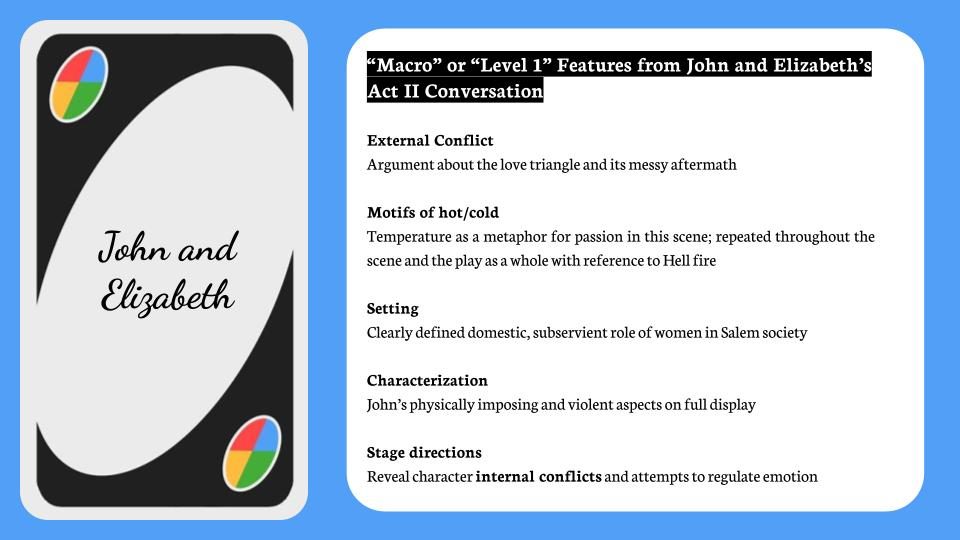
What the essays end up short of is exactly what the criteria reward: concrete detail and attention to authorial choice. A student who knows that John Proctor had an affair can write a paragraph about marital conflict. A student who knows how the stage directions, the hot-and-cold imagery and the domestic setting of one Act II conversation work together can write a much better one.
Prepare moments, not answers
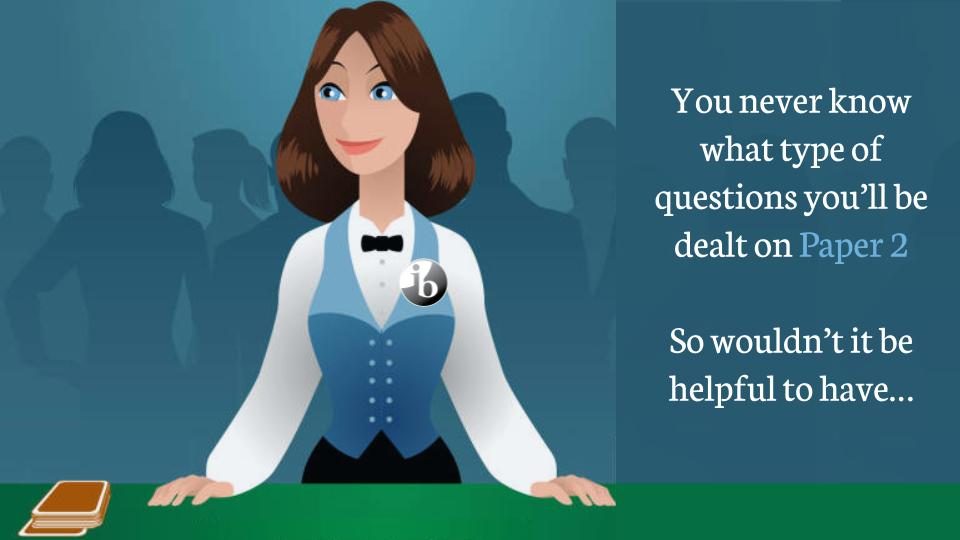
A wild card, in the card game, can be played on any color. That is the whole idea here. Instead of preparing for questions, students prepare a small number of key moments — three per work — studied so closely that each one can be played on whatever question they are dealt.
John and Elizabeth's conversation in Act II is about conflict. It is also about isolation, about moral values, and about the search for truth. The moment doesn't change; the question it's played on does. A student holding six of those, from two works, walks into the exam with material that fits every question on the paper.
You never know what type of questions you'll be dealt on Paper 2 — so wouldn't it be helpful to have an ace up your sleeve?
Two levels of every moment
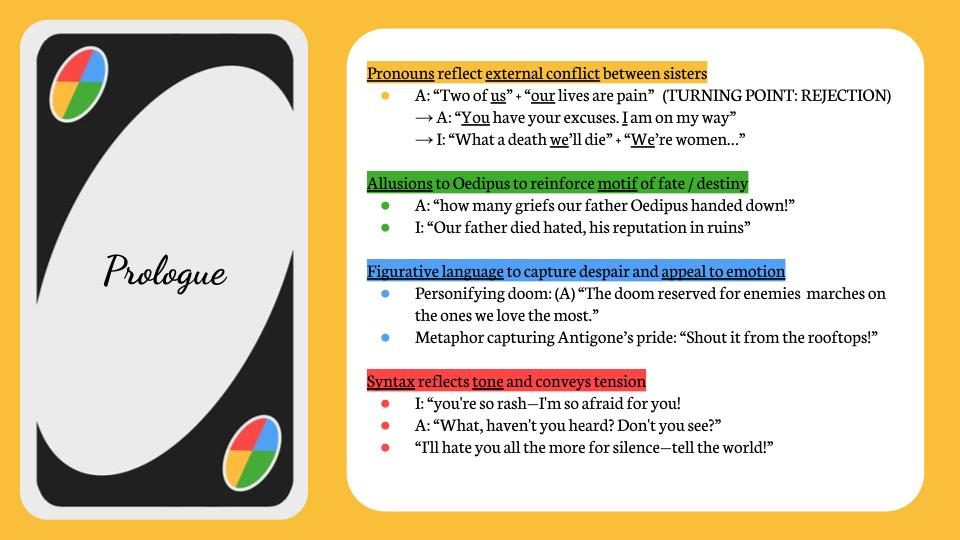
Each card is worked twice. First at the level of structure — what the deck calls the Level 1 features: the conflict, the motif, the setting, the characterization, and, for drama, the stage directions. Then at the level of language: pronouns, allusion, figurative language, syntax, each grouped under the effect it creates and each carrying the quotation that proves it.
In the prologue of Antigone, for instance, the sisters' pronouns shift from "two of us" and "our lives" to "you have your excuses, I am on my way" — the break between them happening in the grammar before either says it. That is the kind of detail an examiner remembers.
The extracts appear on screen clean first, and the annotations build over the following slides, so the class watches the reading happen rather than receiving a finished one. The detailed deck is for teaching; the condensed, printable deck is what students keep for revision.
Then watch one get played
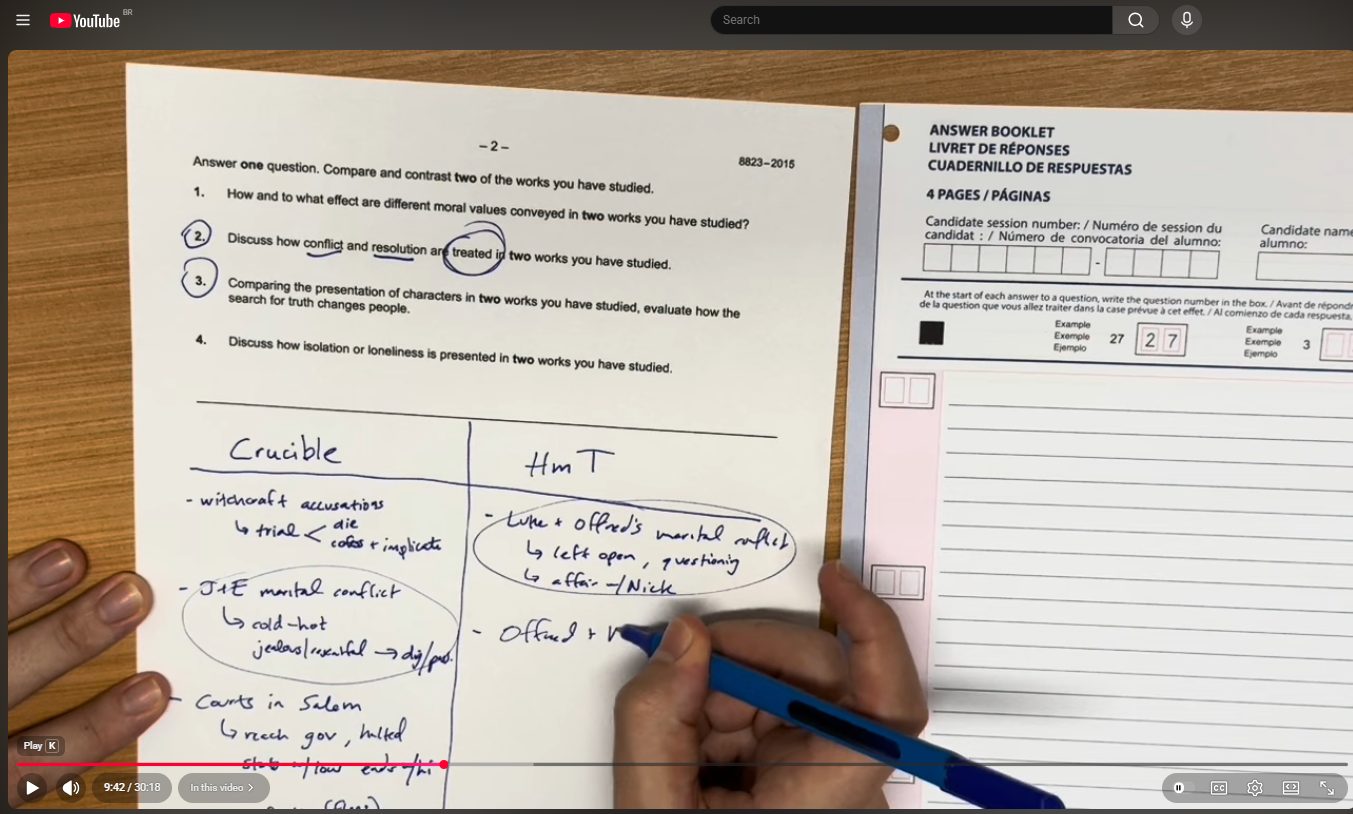
The video takes a real past paper and works it by hand in real time. It shortlists two questions, settles on how conflict and resolution are treated, and brainstorms The Crucible and The Handmaid's Tale side by side. Watch for the moment the John and Elizabeth card turns up — the hot-and-cold imagery from the Act II conversation, now serving a question it was never written for. That is the method working.
The typed outline turns the handwritten plan into a complete essay architecture. The thesis opens with although, so the comparison is built into its first word. Three points of comparison — marital conflicts, the supporting cast, the institutions — are each carried across both works before the essay moves on. Every conflict is paired with its resolution, and every resolution is tagged with its effect: tension, hope, despair. The thesis claims both works create tension and convey hope; the tags track that claim through every paragraph. There's even a note on form — drama makes every conflict spoken and external, where Offred's narration buries hers.
What's in it
- The detailed deck — eighteen key moments across Antigone, The Crucible, The Handmaid's Tale, 1984, Persepolis and Carol Ann Duffy's The World's Wife, each with its extract, its Level 1 features and its language-level annotations
- The printable deck — the same moments condensed to one color-coded card each, for revision
- The modeling video — a real past paper, from choosing the question to a finished plan, in thirty minutes
- The typed outline — the full essay plan from the video: thesis, three points of comparison, conflicts and resolutions for both works
Who it's for
DP Language & Literature, SL and HL, and the method works just as well in Literature. If you teach any of the six works, the cards are ready to hand to students as they are. If you don't, the decks are a template: choose three moments per work, work each at both levels, and you have your own set.
Best introduced once a class has finished its first two works, then returned to before every timed practice.
It pairs with Two Works, One Clock, which supplies the timings, the thesis formula and the body-paragraph structure you can see this outline following. And if Persepolis is on your list, Persepolis Through Four Lenses is the full work study behind its three cards.
Take it
Free Two decks, a video and an outline · decks copy to your own DriveBoth decks copy into your own Drive, editable — add moments from the works you teach and cut the ones you don't. The printable deck is ready to go straight to the copier.